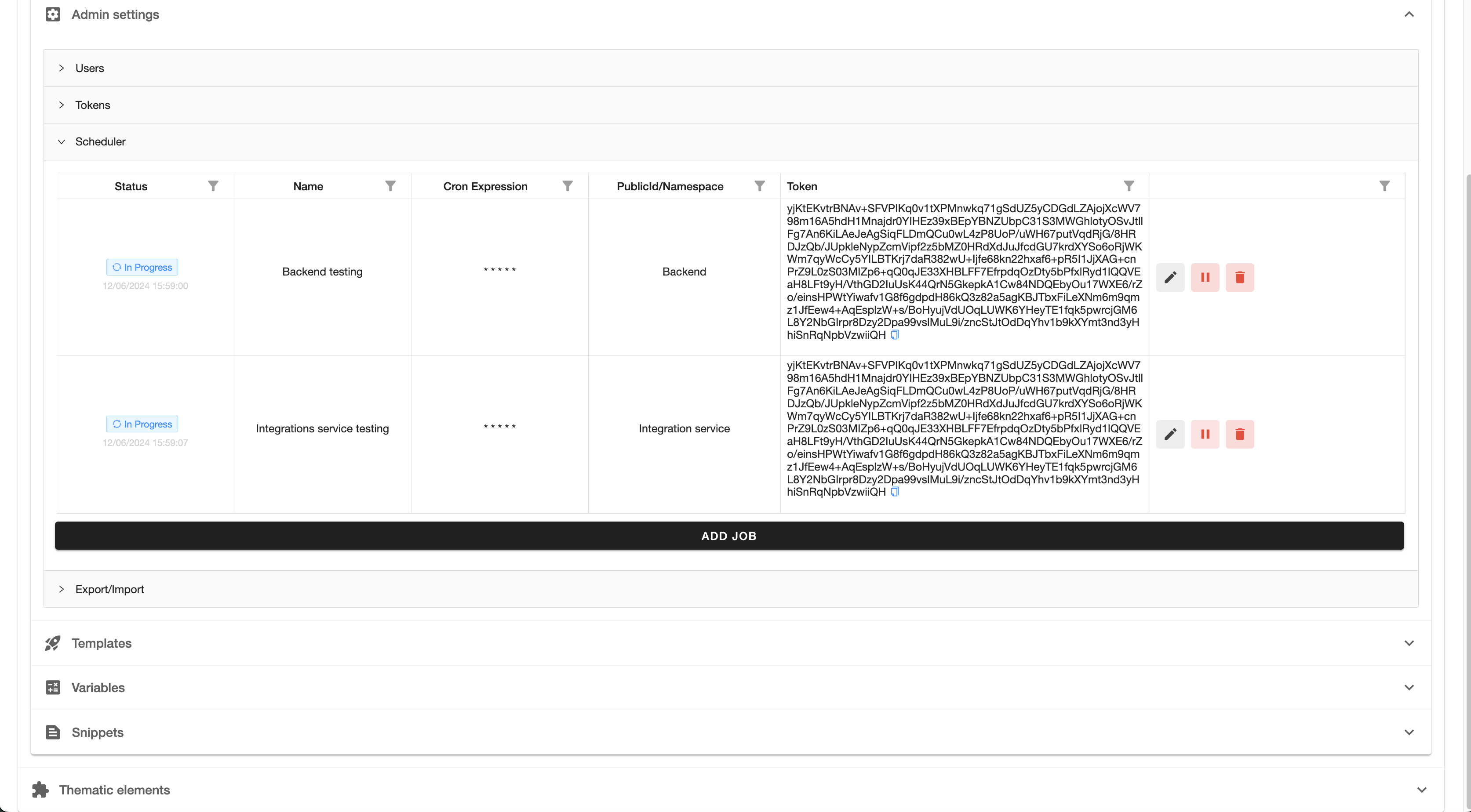
Namespaces in PostuLatte play a crucial role in organizing code and managing access boundaries.
They allow grouping elements into distinct functional blocks, isolating
them from a larger set, representing components as a unified project,
and breaking down complex systems into smaller, manageable parts.
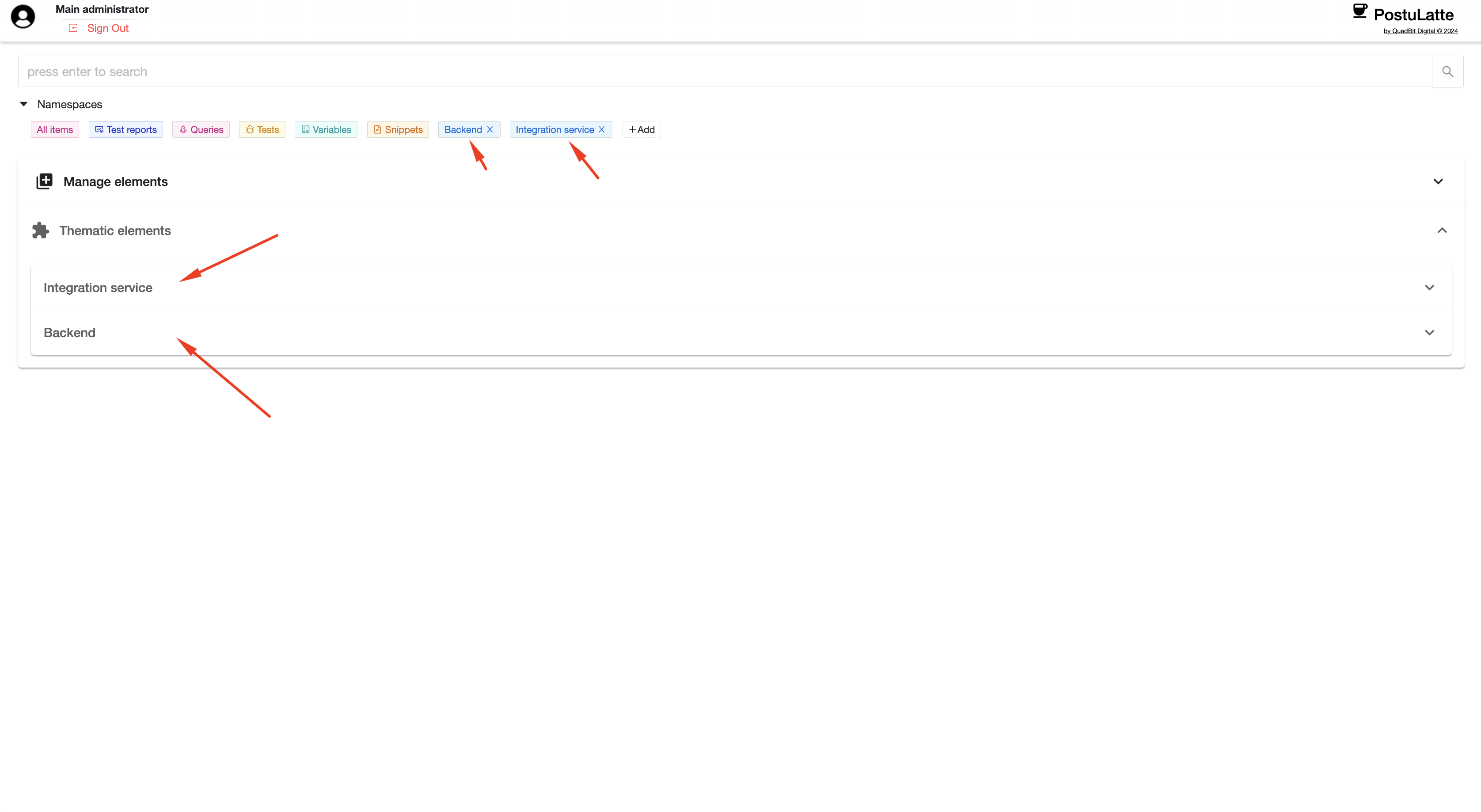
PostuLatte offers several ways to interact with namespaces:
- Grouping - The primary purpose of namespaces is to group elements into projects or functional blocks, making it easier to navigate through them. In your workspace, you can select multiple namespaces, which will be displayed in the order you choose. By default, the system automatically groups elements by type — such as Query, Test, Variable, and Snippet — to streamline organization and access.
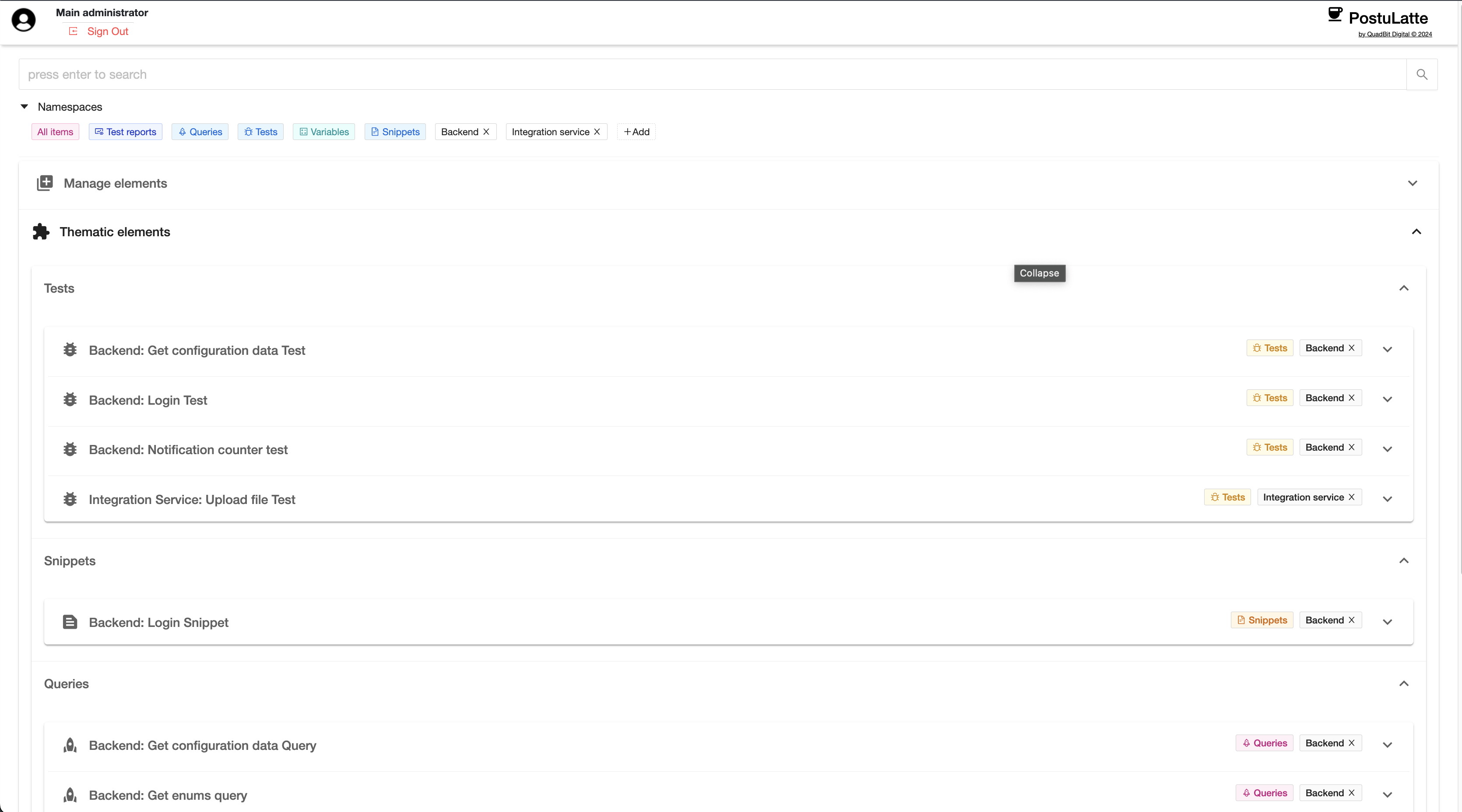
- Access control - allows you to assign specific namespaces to users. This is particularly useful when working on a large project where a user should only have visibility into a specific portion of it. To achieve this, you can define a common namespace for all project elements and then add an additional tag to the relevant parts that need to be visible to a specific user. This tag should also be assigned to the user to ensure proper access. A unique advantage of assigning namespaces to users is the ability to create and configure namespaces in advance, even before any elements are added. This feature allows for proactive planning of future project teams and tasks, ensuring seamless organization and readiness before the project officially begins.
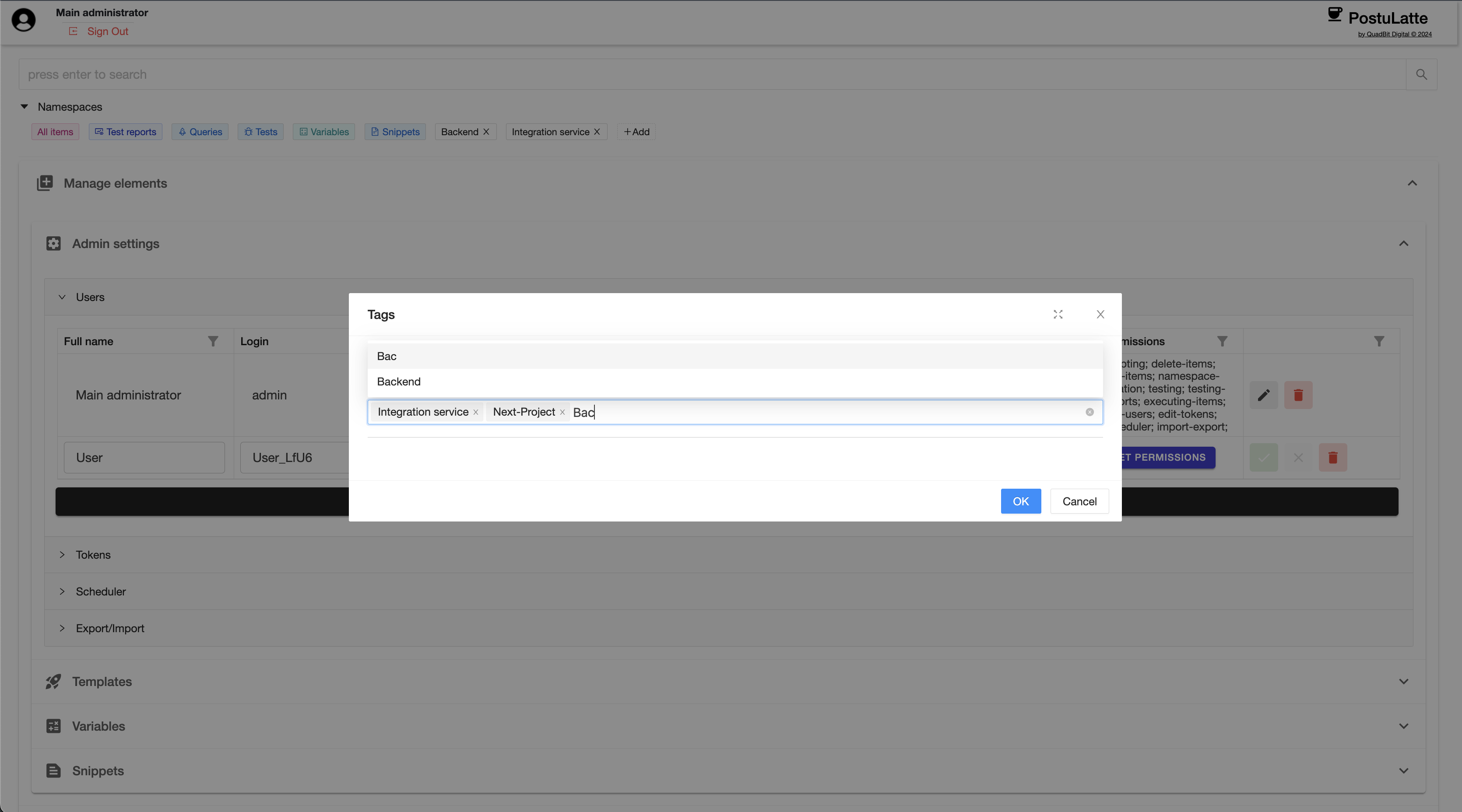
- Scheduled Test Runs – The PostuLatte scheduler allows you to configure a separate task for each namespace, offering flexible capabilities for automated test executions. This enables tailored scheduling of tests for different parts of the project, ensuring that tests are run independently based on the specific requirements of each namespace.